
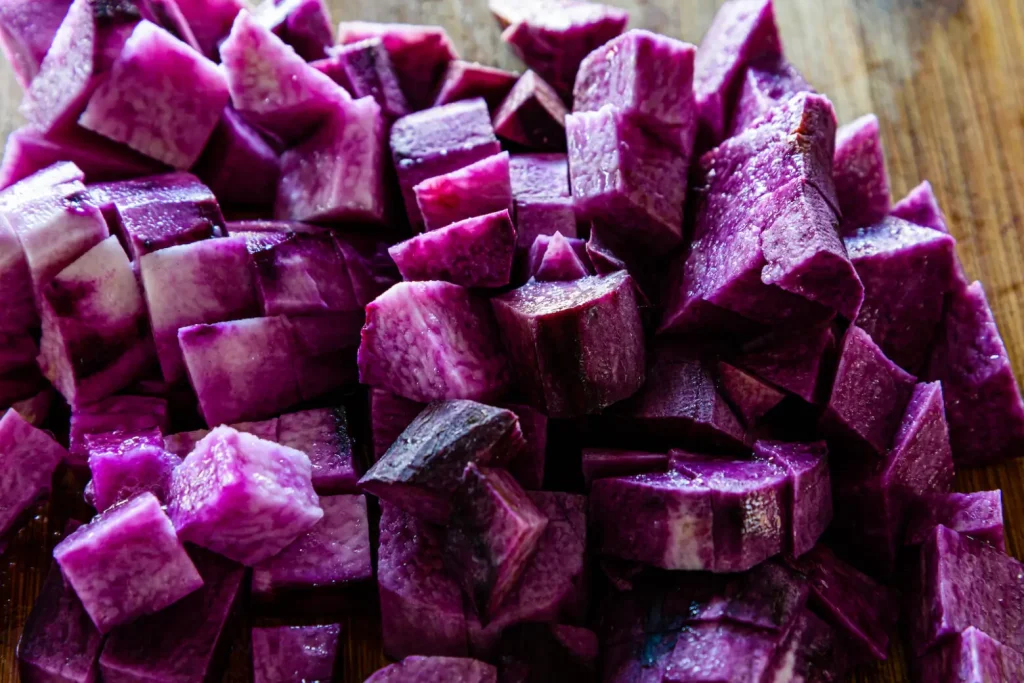
Ube, often called purple yam, has attracted growing attention among people looking for colorful, nutrient rich foods that fit naturally into a healthy lifestyle. Its vibrant purple flesh stands out on a plate, though its appeal goes far beyond appearance. Rich in naturally occurring compounds, vitamins and minerals, ube nutrition offers an interesting combination of taste and nourishment. Many people know ube through desserts, yet its potential reaches much further than sweet recipes.
The deep purple color acts like a visual signature of the plant’s unique composition. Hidden beneath that striking hue are compounds associated with antioxidant intake, dietary fiber and essential nutrients. Ube can become a valuable ingredient for individuals seeking variety in their meals while maintaining balanced eating habits. It delivers a mildly sweet flavor that blends easily with both traditional and modern recipes.
Like a colorful jewel in a basket of vegetables, purple yam benefits can shine when the food is prepared thoughtfully. The way ube is cooked, paired and consumed may influence the overall nutritional value obtained from each serving. Small adjustments in preparation methods can make a noticeable difference.
Many consumers are curious about the most effective strategies for incorporating ube into a healthy diet. Understanding how it works within daily nutrition helps maximize its value while preserving its naturally occurring compounds.
Why ube deserves a place in a balanced diet?
Ube belongs to the yam family and provides a variety of nutrients that support a diverse eating pattern. One of its most appreciated characteristics is its naturally occurring fiber content. Fiber contributes to meal satisfaction and can support normal digestive function when consumed as part of a balanced diet. Individuals looking to diversify their carbohydrate sources often find ube to be an attractive alternative to more common starches.
The distinctive purple color comes from plant compounds known as anthocyanins. These compounds are also found in foods such as berries, red cabbage and purple grapes. Many nutrition enthusiasts value foods containing anthocyanins because they contribute to the overall antioxidant content of the diet. A colorful plate often reflects a broader spectrum of nutrients, making ube a practical addition to meals focused on variety.
Interest in ube has expanded as consumers seek whole foods that combine flavor, versatility and nutritional value. Whether incorporated into breakfast bowls, baked dishes or homemade snacks, purple yam can complement many eating patterns. Its naturally sweet profile often allows recipes to rely less heavily on added sugars.
Ube also contains vitamins and minerals that contribute to a balanced nutritional intake. While nutrient levels may vary depending on cultivation and preparation methods, purple yam generally provides a combination of carbohydrates, fiber and micronutrients that can fit comfortably within a healthy eating plan.
People who consume a wide range of vegetables often benefit from greater dietary diversity. Ube offers an opportunity to expand food choices while introducing a unique texture and flavor. Variety remains one of the most practical principles in nutrition, helping ensure a broader intake of beneficial nutrients over time.
How should ube be prepared for maximum nutritional value?
The preparation method plays a significant role in preserving the nutritional qualities of many vegetables, including ube. Excessive processing, large amounts of added sugar or prolonged cooking can reduce some of the naturally occurring compounds that make purple yam appealing from a nutritional perspective.
Steaming is often considered one of the most favorable cooking methods. This technique exposes the yam to less water than boiling, helping preserve certain water soluble nutrients. The texture remains pleasant while the natural flavor is maintained. Many people enjoy steamed ube as a simple side dish or as a base for healthier recipes.
Roasting offers another excellent option. Gentle roasting concentrates the natural sweetness of the yam without requiring substantial amounts of sugar. The result is a rich flavor profile that can complement savory dishes just as effectively as sweet preparations.
Boiling remains common and can still be a practical choice. The key lies in avoiding excessive cooking times. Overcooking may affect texture and potentially reduce the concentration of certain compounds. Using minimal water and cooking only until tender can help preserve quality.
Some preparation methods deserve more caution. Commercial desserts made with ube may contain significant quantities of added sugar, cream or processed ingredients. While these products can be enjoyed occasionally, they may not represent the most effective way to maximize the nutritional potential of purple yam.
Cooking methods that support nutrient retention
Several techniques can help maintain the qualities that make ube valuable within a healthy diet. Simple cooking approaches often provide the best balance between taste and nutritional preservation. Freshly prepared ube generally retains more of its original characteristics than heavily processed alternatives.
- steaming
- roasting
- baking
- light boiling
- air frying
These methods typically require fewer added ingredients and allow the natural flavor of the yam to remain prominent. Choosing moderate cooking temperatures can also contribute to preserving texture and appearance.
Ingredients that pair well with ube
The nutritional value of a meal depends not only on individual ingredients but also on how foods are combined. Ube pairs well with nutrient dense ingredients that complement its flavor and texture.
Examples include Greek yogurt, nuts, seeds, oats and fresh fruit. These combinations can contribute protein, healthy fats and additional fiber. Pairing ube with protein rich foods may also help create more balanced meals that support satiety throughout the day.
Natural seasonings such as cinnamon, vanilla or coconut can enhance flavor without relying heavily on refined sugars. These combinations create satisfying dishes while maintaining a focus on overall nutritional quality.
Best ways to include ube throughout the day
One of the strengths of ube lies in its versatility. It can be incorporated into multiple meals without requiring dramatic changes to existing eating habits. Breakfast offers one of the easiest opportunities. Mashed ube can be blended into oatmeal, yogurt bowls or smoothies, adding both color and flavor.
Lunch provides additional possibilities. Roasted cubes of purple yam can accompany salads, grain bowls or lean protein dishes. Their mild sweetness creates a pleasant contrast with vegetables and savory ingredients.
Snacks made with ube can serve as an alternative to highly processed products. Homemade baked ube bites or lightly seasoned roasted slices offer satisfying texture while remaining relatively simple. This approach allows greater control over ingredients and portion sizes.
Dinner meals can also benefit from the inclusion of purple yam. It functions well as a side dish alongside fish, poultry or plant based proteins. The natural sweetness complements many savory flavors and contributes variety to the plate.
Regular inclusion often proves more effective than occasional large portions. Consistency helps integrate nutrient rich foods into everyday habits, creating sustainable dietary patterns over time.
Can ube support healthy weight management?
Weight management depends on numerous factors, including overall dietary patterns, physical activity, sleep quality and lifestyle habits. No single food determines success or failure. Ube can nevertheless play a useful role within a balanced approach.
The fiber naturally present in purple yam may contribute to feelings of fullness. Meals that contain fiber rich ingredients often encourage greater satisfaction compared with highly refined alternatives. This characteristic can support mindful eating habits when combined with balanced meal planning.
Replacing heavily processed desserts or snacks with thoughtfully prepared ube based alternatives may also help improve overall dietary quality. The naturally sweet flavor can satisfy taste preferences while reducing dependence on products containing large amounts of added sugar.
Portion awareness remains important. Even nutrient dense foods contribute calories. Incorporating ube as part of balanced meals rather than viewing it as a miracle solution represents the most realistic approach.
A healthy eating pattern resembles a well organized orchestra. Individual foods play their own instruments, though the overall harmony depends on how every component works together. Ube can certainly be one valuable member of that ensemble.
Common mistakes that reduce the benefits of ube
Many people unintentionally reduce the nutritional value of ube through preparation choices. One common mistake involves excessive amounts of sugar. Traditional desserts can transform a naturally nutritious ingredient into a product dominated by sweeteners.
Another issue involves relying exclusively on processed ube products. Some packaged foods contain artificial flavors, colorings or added ingredients that contribute little nutritional value. Reading ingredient labels can help consumers make more informed choices.
Overcooking represents another concern. Prolonged exposure to heat may affect texture and potentially diminish some naturally occurring compounds. Gentle cooking methods generally provide better results.
Ignoring overall dietary balance can also limit potential benefits. Ube works best when combined with vegetables, fruits, quality protein sources and healthy fats. Viewing it as one component of a varied eating pattern encourages more sustainable nutritional habits.
Choosing whole or minimally processed forms, using moderate cooking techniques and pairing ube with nutrient dense foods can help maximize its place within a healthy lifestyle. These simple practices allow the natural qualities of purple yam to remain at the center of every serving.